
Your Garage Door Works Hard — Are You Taking Care of It?
Think about how many times you open and close your garage door each day. If you're like most Silver Spring homeowners, it's at least two to four times — sometimes more. That adds up to over a thousand cycles per year, and every single one puts wear on the springs, cables, rollers, tracks, and opener.
Despite being the largest moving part of your home, the garage door is one of the most neglected when it comes to regular maintenance. Most people don't give it a second thought until it stops working, makes a terrible noise, or — worst case — becomes a safety hazard.
So how often should you actually service your garage door? And what does proper maintenance involve? Let's break it down.
The Short Answer: At Least Once a Year
At a minimum, your garage door should receive a professional inspection and tune-up once a year. Think of it like an annual checkup for your car — it's your chance to catch small problems before they turn into expensive repairs or dangerous failures.
If your garage door gets heavy use — for example, if multiple family members come and go throughout the day, or if you use your garage as a workshop or home gym — you may benefit from scheduling maintenance every six months.
Homes in the Silver Spring area also deal with seasonal temperature swings, humidity, and occasional storms, all of which can accelerate wear on garage door components. An annual service visit helps ensure your door is ready to handle whatever the Mid-Atlantic weather throws at it.
What Does a Professional Garage Door Tune-Up Include?
A thorough maintenance visit isn't just a quick look and a thumbs-up. Here's what a qualified technician should inspect and address during a routine service call:
1. Visual Inspection of All Components
The technician will examine the springs, cables, rollers, hinges, tracks, brackets, and weatherstripping for signs of wear, rust, fraying, or damage. Catching a worn cable or a cracked roller early can prevent a sudden failure down the road.
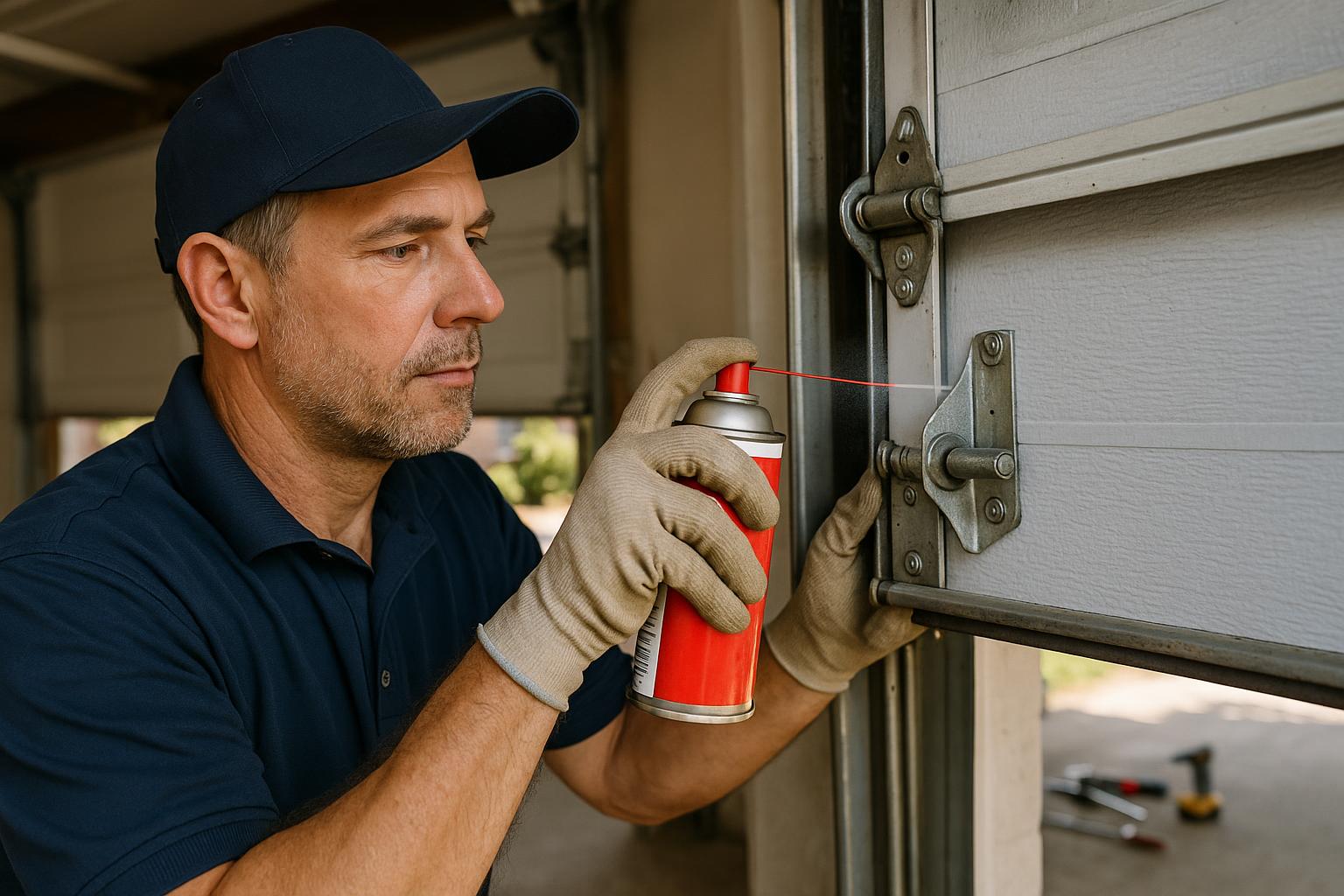
2. Lubrication of Moving Parts
Proper lubrication reduces friction, minimizes noise, and extends the life of your garage door's mechanical components. The technician will apply a garage-door-specific lubricant to the springs, rollers, hinges, and tracks. This is one of the simplest steps, but it makes a noticeable difference in how smoothly and quietly your door operates.
3. Spring Tension and Balance Test
A balanced garage door should stay in place when you manually lift it to about waist height and let go. If it falls or rises on its own, the spring tension needs adjustment. An unbalanced door puts extra strain on the opener and can shorten its lifespan significantly.
4. Safety Sensor Alignment Check
Federal law requires all automatic garage doors to have photo-eye safety sensors that prevent the door from closing on a person, pet, or object. During maintenance, the technician will verify that these sensors are properly aligned and functioning. This is especially important for families with young children.
5. Opener Performance Evaluation
The garage door opener's force settings, travel limits, and auto-reverse function will all be tested and adjusted if necessary. An opener that's working too hard or not reversing properly is both an efficiency problem and a safety concern.
6. Hardware Tightening
The constant vibration of a garage door in motion can loosen bolts, brackets, and screws over time. A maintenance visit includes tightening all hardware to keep everything secure and aligned.
7. Weatherstripping and Seal Inspection
The rubber seal along the bottom of your garage door and the weatherstripping around the frame keep out rain, drafts, pests, and debris. These materials degrade over time and may need to be replaced to maintain energy efficiency and protect the contents of your garage.
What You Can Do Between Professional Visits
While annual professional service is essential, there are a few simple things you can do on your own throughout the year to keep your garage door in good shape:
- Listen for unusual sounds. Grinding, scraping, or popping noises can indicate a developing problem.
- Watch the door's movement. It should travel smoothly without jerking, hesitating, or shaking.
- Test the auto-reverse. Place a roll of paper towels on the ground in the door's path and press the close button. The door should reverse upon contact. If it doesn't, call a professional immediately.
- Keep the tracks clean. Wipe down the inside of the tracks with a damp cloth to remove dirt and debris. Avoid using WD-40 or grease on the tracks themselves — a clean, dry track is what you want.
- Check the door's balance. Disconnect the opener by pulling the release handle, then manually lift the door halfway. If it doesn't stay put, the springs may need adjustment — and that's a job for a trained technician, not a DIY project.
The Cost of Skipping Maintenance
It's tempting to skip maintenance when everything seems to be working fine. But here's the reality: most garage door emergencies are preventable. A frayed cable that snaps, a spring that breaks under stress, or an opener that burns out — these are often the result of years of neglected wear.
Consider the math. A routine maintenance visit typically costs a fraction of what you'd pay for an emergency spring replacement or a new opener installation. And emergency calls — especially after hours or on weekends — come with premium pricing.
Beyond the financial cost, there's the inconvenience. A garage door that won't open on a Monday morning in Wheaton or Takoma Park means you're late for work, scrambling to find a same-day repair, and possibly leaving your home unsecured in the meantime.
When to Schedule More Frequent Service
Some situations call for more than one visit per year. Consider scheduling maintenance every six months if:
- Your garage door is more than 10 years old
- You use your garage door more than four times daily
- You've had a repair in the past year (follow-up checks are wise)
- Your garage is attached to your home and affects indoor temperature
- You live in an area with heavy tree cover where debris accumulates around the tracks and sensors
Don't Wait for a Breakdown
Your garage door is something you rely on every single day. Keeping it maintained isn't just about avoiding breakdowns — it's about safety, security, energy efficiency, and protecting your investment.
If it's been more than a year since your last garage door service — or if you can't remember the last time a professional looked at it — now is the time. Silver Spring Garage Door offers comprehensive maintenance services for homeowners throughout Silver Spring, Aspen Hill, Bethesda, Rockville, and the surrounding communities. We'll make sure every component is inspected, adjusted, and ready to perform reliably for the months ahead.
Give us a call or schedule your maintenance visit online. A little preventive care today saves you a lot of hassle tomorrow.