
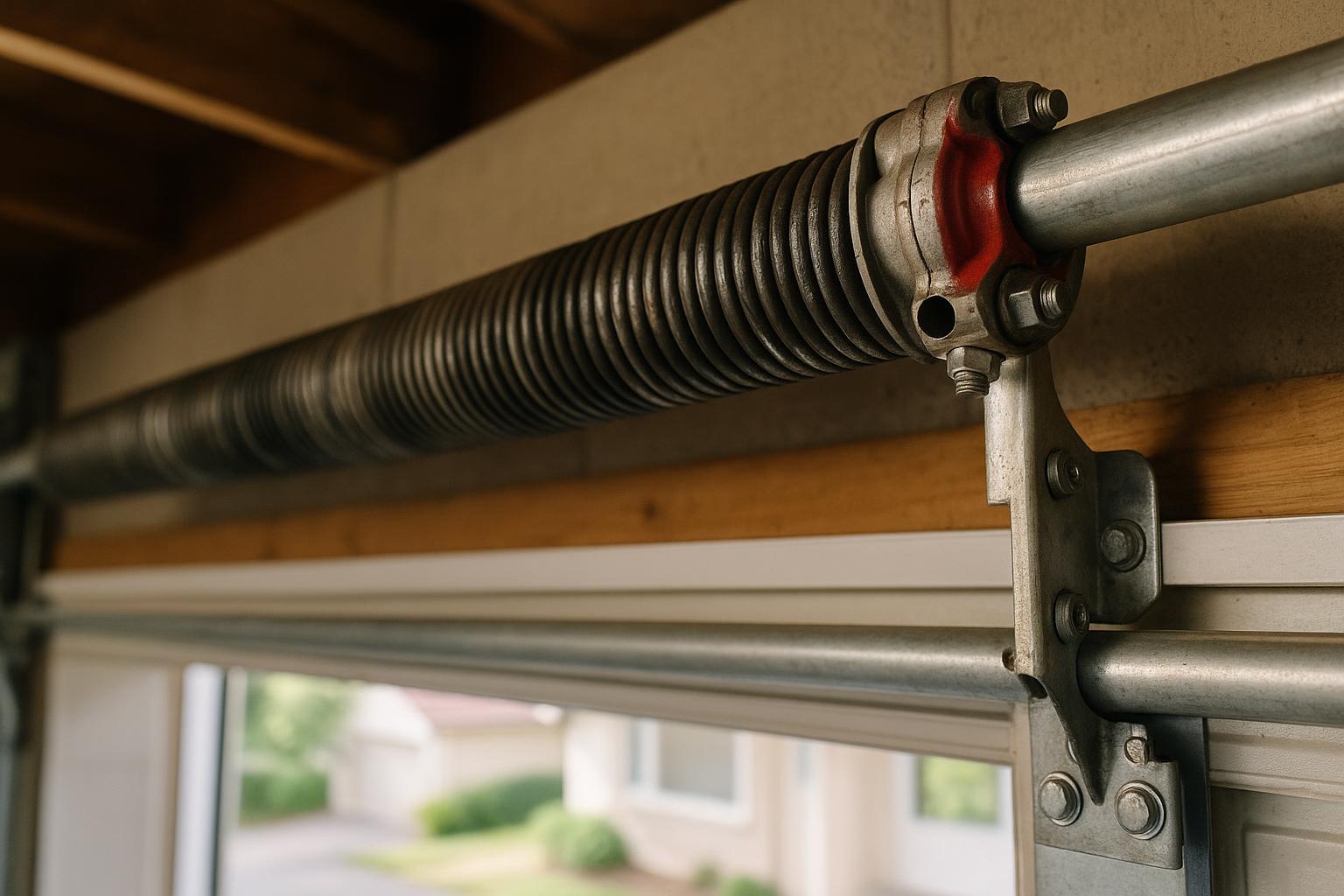
Your Garage Door Springs Are Working Harder Than You Think
Every time you open or close your garage door, the springs do the heavy lifting — literally. Whether you have torsion springs mounted above the door or extension springs running along the horizontal tracks, these components bear the full weight of your garage door, which can range from 130 to over 400 pounds depending on the material and size.
Most homeowners in Silver Spring don't think much about their garage door springs until something goes wrong. But springs are wear-and-tear components with a finite lifespan, and recognizing the early warning signs of failure can save you from an inconvenient — or even dangerous — situation.
How Long Do Garage Door Springs Last?
The average garage door spring is rated for approximately 10,000 cycles, with one cycle being a single open-and-close sequence. If you use your garage door four times a day, that works out to roughly seven years of use. Some high-cycle springs are rated for 25,000 or even 50,000 cycles, but these are typically installed by request and at a higher upfront cost.
Several factors can shorten or extend the life of your springs:
- Frequency of use: Families with multiple drivers or those who use the garage as a primary entry point will wear springs faster.
- Climate and humidity: The humid summers and cold winters we experience in the Silver Spring area can accelerate rust and corrosion on uncoated springs.
- Maintenance habits: Springs that are regularly lubricated and inspected tend to last longer than neglected ones.
- Door weight: Heavier doors made from solid wood or insulated steel put more stress on springs than lightweight aluminum models.
7 Warning Signs Your Garage Door Springs Are Failing
1. The Door Feels Unusually Heavy
Try this simple test: disconnect your garage door opener by pulling the emergency release cord, then manually lift the door. A properly balanced door with healthy springs should feel relatively light and stay open on its own about three to four feet off the ground. If the door feels extremely heavy or slams down the moment you let go, your springs have likely lost tension.
2. The Door Opens Unevenly or Crooked
If your garage door tilts to one side as it opens, one of your springs may be weaker than the other or may have already broken. Extension spring systems are particularly prone to this issue because each side operates somewhat independently. A crooked door puts stress on the tracks, rollers, and opener, which can lead to cascading damage if not addressed.
3. You Hear a Loud Bang From the Garage
A broken torsion spring releases its stored energy all at once, producing a loud bang that many homeowners describe as sounding like a gunshot or a car backfiring. If you hear this sound coming from your garage, inspect the spring above the door. A broken torsion spring will have a visible gap in the coil. Do not attempt to operate the door if you suspect a broken spring.
4. Visible Gaps or Stretched Coils
Take a moment to visually inspect your springs. Healthy torsion springs have tightly wound, evenly spaced coils. If you notice a gap in the middle of the spring or coils that appear stretched or deformed, the spring is either broken or nearing the end of its life.
5. The Opener Struggles or Stops Mid-Cycle
Your garage door opener is designed to work in partnership with the springs — it provides the control, while the springs provide the counterbalance. When springs weaken, the opener has to work much harder to lift the door. You might notice the motor straining, the door moving more slowly than usual, or the opener stopping partway through a cycle. Running your opener under this kind of strain can burn out the motor prematurely.
6. Jerky or Shaky Movement
A garage door should travel smoothly along its tracks. If you notice jerky, stuttering movement — especially when the door is going up — this can indicate that the springs are providing inconsistent tension. This is often a sign of advanced wear and a signal that failure is imminent.
7. Rust and Corrosion on the Springs
Surface rust might seem cosmetic, but it actually weakens the spring wire and increases friction between the coils. Over time, rust can reduce a spring's lifespan by several years. If your springs show significant corrosion, it's worth having a professional assess how much life they have left.
Why You Should Never Replace Garage Door Springs Yourself
We understand the appeal of DIY projects, and many garage door maintenance tasks are perfectly safe for handy homeowners. Spring replacement is not one of them. Torsion springs are under extreme tension, and improper handling can result in serious injury or death. Even extension springs, which are somewhat easier to access, can cause harm if they snap free unexpectedly.
Professional technicians have the specialized tools, training, and experience to replace springs safely and efficiently. They'll also ensure the new springs are properly sized and calibrated for your specific door, which is critical for balanced operation and long-term reliability.
Should You Replace One Spring or Both?
If one spring has broken or is showing signs of failure, we strongly recommend replacing both springs at the same time. Here's why: if one spring has reached the end of its lifespan, the other one is almost certainly close behind. Replacing both springs together ensures balanced operation, prevents a second service call in the near future, and saves you money on labor costs.
This is especially true for torsion spring systems, where both springs share the load and need to provide equal tension for the door to operate correctly.
How Regular Maintenance Extends Spring Life
One of the best things you can do to get the most out of your garage door springs is to schedule regular maintenance. A professional tune-up typically includes:
- Lubricating springs, rollers, hinges, and tracks
- Checking spring tension and door balance
- Inspecting cables, brackets, and hardware for wear
- Testing safety features including the auto-reverse mechanism
- Tightening loose bolts and fasteners
Many of our customers in Wheaton, Takoma Park, Bethesda, and throughout the Silver Spring area schedule annual maintenance visits. It's a small investment that can add years to the life of your springs and help you catch problems before they turn into emergencies.
Don't Wait for a Complete Failure
A broken garage door spring is more than an inconvenience — it can leave your car trapped in the garage, compromise your home's security, and create a safety hazard for your family. If you've noticed any of the warning signs described above, it's time to have your springs inspected by a qualified technician.
At Silver Spring Garage Door, we provide fast, honest spring replacement and repair services throughout Silver Spring, Aspen Hill, Rockville, and the surrounding communities. We carry a wide selection of springs to fit virtually any residential or commercial garage door, and most replacements can be completed in a single visit.
Whether you're dealing with a spring that's already broken or you just want peace of mind that your system is in good shape, give us a call. We'll get your garage door back to smooth, safe, reliable operation.