
Your Garage Door Shouldn't Sound Like That
You press the button on your garage door opener and instead of the smooth, quiet hum you're used to, you hear something unsettling — a loud grinding, a high-pitched squeal, or a rhythmic banging that makes the neighbors look over. If your garage door has started making strange noises, you're not alone. It's one of the most common concerns we hear from homeowners across Silver Spring, and for good reason.
A noisy garage door isn't just annoying. In many cases, those sounds are early warning signs of mechanical problems that could lead to a breakdown, a safety hazard, or an expensive repair if left unaddressed. The good news is that most garage door noises have identifiable causes, and many of them are fixable before they turn into bigger issues.
Let's break down the most common garage door sounds, what's causing them, and what you should do about each one.
Grinding or Scraping Sounds
A grinding or scraping noise when your garage door opens or closes usually points to one of two things: worn-out rollers or a misaligned track.
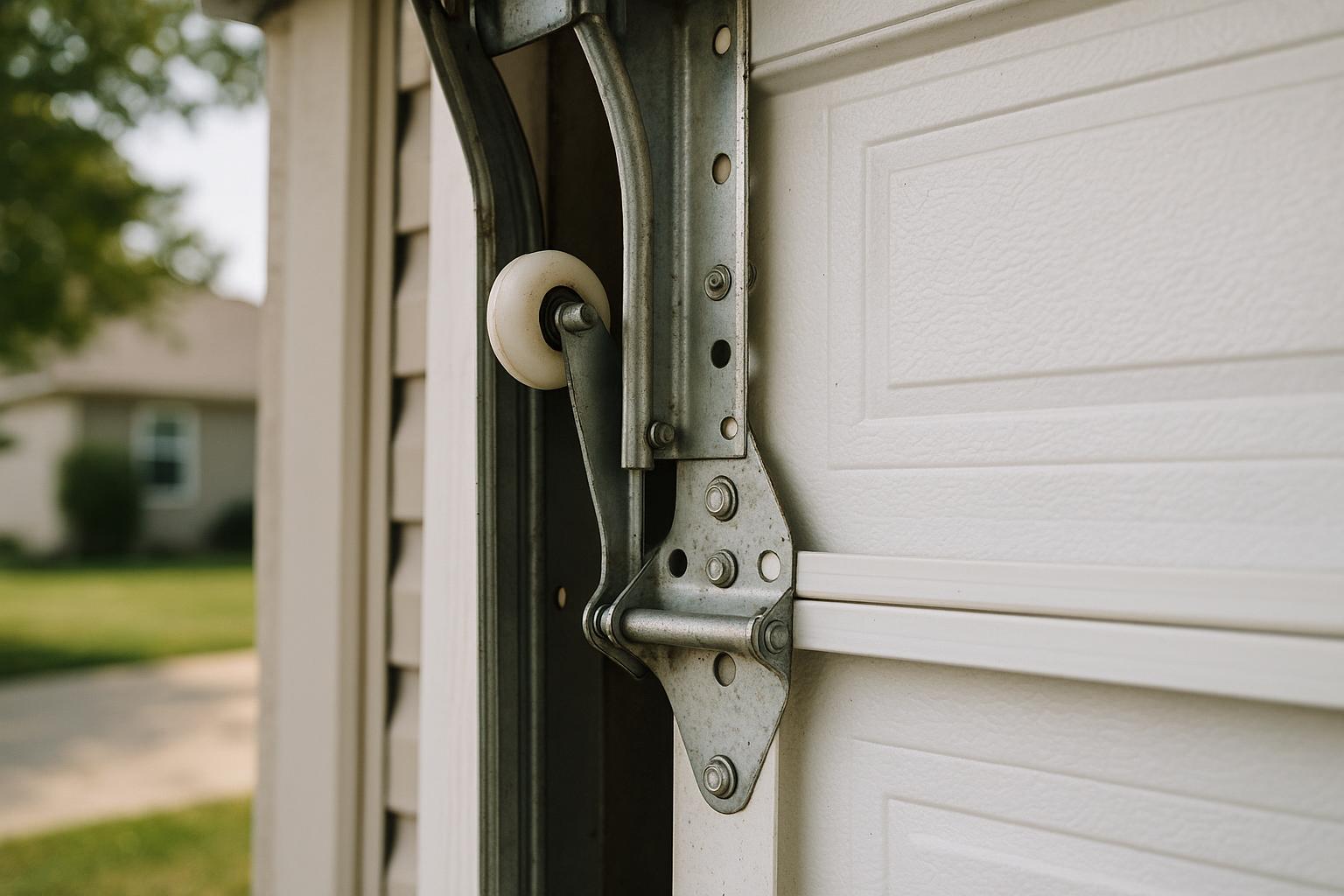
Worn rollers: Most garage doors use steel or nylon rollers that ride along the vertical tracks. Over time, steel rollers can wear down, lose their smooth surface, or even crack. When this happens, they create a harsh grinding sound as they drag along the track. Nylon rollers tend to be quieter and last longer, but they can wear out too.
Misaligned tracks: If the metal tracks on either side of your garage door become bent, shifted, or knocked out of alignment, the door can scrape against them as it moves. You might also notice the door hesitating or getting stuck at certain points.
What to do: Inspect the rollers visually for signs of wear, cracks, or flat spots. If they look damaged, they should be replaced. For track alignment issues, it's best to call a professional since improperly adjusting tracks can make the problem worse or create a safety risk.
Squealing or Screeching
A high-pitched squeal or screech is one of the most cringe-worthy garage door noises, and it usually comes down to friction. Metal parts that aren't properly lubricated will rub against each other and produce that unmistakable sound.
The most common culprits include:
- Hinges between door panels
- Rollers moving along the tracks
- The torsion spring system above the door
- The bearing plates at the top of the door
What to do: Apply a garage door-specific lubricant (not WD-40, which is a solvent, not a lubricant) to the hinges, rollers, springs, and bearing plates. A silicone-based or lithium grease spray works well. This is part of routine garage door maintenance that we recommend Silver Spring homeowners do at least twice a year — once in the spring and once in the fall.
Banging or Popping Sounds
If you hear a loud bang or pop when the door starts moving, the issue could be related to your torsion springs or the panels themselves.
Torsion spring issues: The torsion springs above your garage door are under extreme tension. As they age or lose lubrication, they can make a loud popping or banging noise when the door begins to open. In the worst case, a sudden loud bang could mean a spring has broken — if this happens, stop using the door immediately.
Panel problems: Bent or warped panels can pop or bang as they flex during operation. This is especially common in older wooden garage doors or doors that have been impacted by a vehicle or heavy object.
What to do: If the noise is coming from the springs, do not attempt to adjust or repair them yourself. Torsion springs are under enough tension to cause serious injury. Call a garage door technician to inspect and service them safely. For panel damage, a professional can assess whether the panel needs to be replaced or if the entire door is compromised.
Rattling or Vibrating
A rattling sound often means something is loose. Garage doors have dozens of nuts, bolts, screws, and brackets that can gradually loosen from the constant vibration of daily use.
Common sources of rattling include:
- Loose track brackets
- Loose chain or belt on the opener
- Unsecured hardware on the door panels
- A wobbly garage door opener unit mounted to the ceiling
What to do: Grab a socket wrench and carefully tighten any hardware you can see along the tracks, hinges, and brackets. Check the mounting brackets for your garage door opener as well. If the chain on your opener is sagging or loose, it may need to be adjusted — your owner's manual should have instructions, or a technician can handle it during a maintenance visit.
Humming or Buzzing Without Movement
If you press your garage door opener button and hear a hum or buzz but the door doesn't move, the motor is engaging but the door isn't responding. This could mean:
- The door is locked or manually disengaged
- The drive gear inside the opener is stripped
- The motor capacitor is failing
- Something is obstructing the door that you can't see
What to do: First, check that the door isn't locked and that the emergency release cord hasn't been pulled. If those aren't the issue, the opener likely needs professional attention. A stripped drive gear is a common repair for older openers and is usually more affordable than replacing the entire unit.
When to Call a Professional
Some garage door noises are easy to fix with a can of lubricant and a wrench. Others require the expertise and tools of a trained technician. Here's a simple rule of thumb:
You can handle it yourself if:
- The fix involves lubrication
- You're tightening visible, accessible hardware
- You're replacing a light bulb in the opener (yes, a loose bulb can rattle too)
Call a professional if:
- The noise involves springs or cables
- The door is visibly off-track
- The opener motor runs but the door won't move
- You hear a sudden loud bang and the door stops working
- You're unsure of the source of the noise
Ignoring unusual sounds can turn a minor repair into a major one. A loose roller today can become a door off its tracks tomorrow. A squeaky spring can become a broken spring that leaves your car trapped in the garage on a Monday morning.
Keep Your Garage Door Quiet and Running Smoothly
Your garage door is one of the largest moving parts of your home, and it works hard — most residential garage doors open and close over a thousand times per year. Regular maintenance goes a long way toward preventing noisy surprises and extending the life of your door and opener.
If your garage door has been making noises that don't sound right, don't wait for the problem to get worse. Silver Spring Garage Door offers thorough inspections and maintenance services to homeowners throughout Silver Spring, Wheaton, Takoma Park, and surrounding areas. We'll diagnose the noise, fix the problem, and help you avoid costly breakdowns down the road.
Give us a call today to schedule a maintenance visit or repair. A quiet garage door is a happy garage door — and a happy homeowner.