
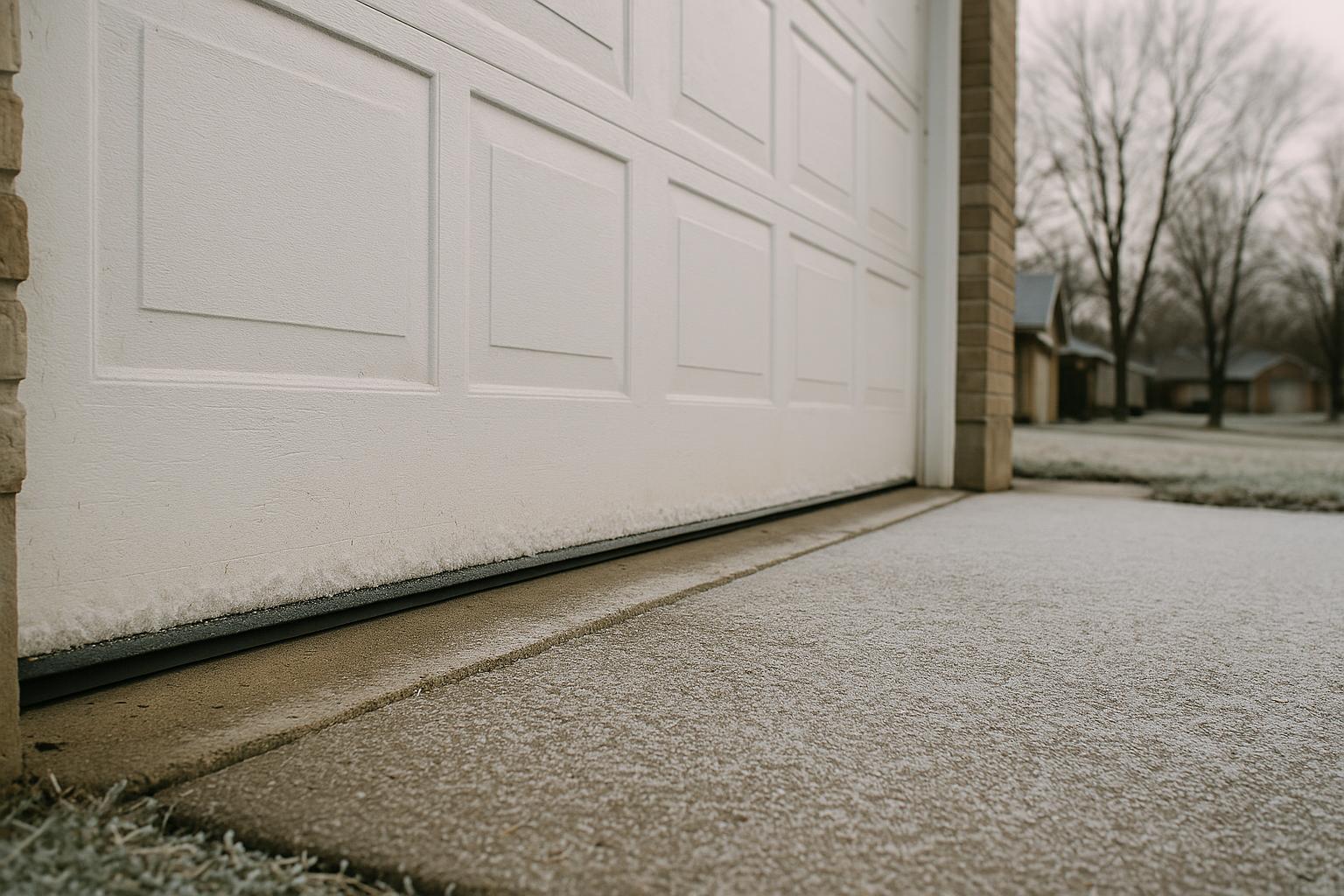
Why Cold Weather Wreaks Havoc on Garage Doors
You're running late on a freezing Silver Spring morning, you press the button on your garage door opener, and nothing happens. Or maybe the door groans, lifts an inch, and stops. Cold weather garage door problems are one of the most common calls we get during the winter months — and the frustration is real.
The good news is that most cold-weather garage door issues have straightforward causes and solutions. Some you can handle yourself, and others require a professional. Let's walk through the most common reasons your garage door refuses to cooperate when temperatures drop, and what you can do about each one.
The Weatherstripping Is Frozen to the Ground
This is the number one reason garage doors get stuck in winter. The rubber weatherstripping along the bottom of your door is designed to create a seal against moisture, debris, and drafts. But when temperatures dip below freezing — which happens regularly in Silver Spring from December through February — moisture between the seal and the concrete floor can freeze overnight, essentially gluing your door to the ground.
How to Fix It
- Never force the door open. If you hit the opener button and the door is frozen to the ground, the opener will strain against the ice. This can burn out the motor, strip the gears, or snap a cable. If the door doesn't move freely, stop immediately.
- Break the seal gently. Use a flat shovel or a putty knife to carefully chip away the ice along the bottom edge of the door. Work from the outside, sliding the tool between the weatherstripping and the floor.
- Apply warm water. Pour warm (not boiling) water along the base of the door to melt the ice. Boiling water can crack concrete and damage the weatherstripping.
- Prevent it from happening again. Apply a silicone-based lubricant or cooking spray to the bottom seal before the next freeze. This creates a barrier that prevents moisture from bonding the rubber to the concrete.
Metal Parts Contract and Stiffen
Your garage door system is full of metal components — springs, tracks, rollers, and hinges. When temperatures drop, metal contracts slightly. This contraction can cause parts to bind, increase friction, and make the entire system work harder than it should.
Springs are especially vulnerable. Torsion springs that are already near the end of their lifespan may lose enough tension in cold weather that they can no longer lift the door's weight. If your door feels unusually heavy when you try to lift it manually, weakened springs could be the culprit.
How to Fix It
- Lubricate all moving parts. Use a garage door-specific lubricant or white lithium grease on the springs, rollers, hinges, and tracks. Avoid WD-40 for this purpose — it's a solvent, not a long-term lubricant, and it can actually attract dirt and grime.
- Call a professional for spring issues. If the springs seem weak or the door is too heavy to lift by hand, don't attempt a DIY spring repair. Garage door springs are under extreme tension and can cause serious injury. This is one repair that should always be left to a trained technician.
The Opener's Sensitivity Settings Are Off
Modern garage door openers have force and travel limit settings that control how hard the motor works and how far the door travels. In cold weather, increased friction in the system can trick the opener into thinking the door has hit an obstruction, causing it to stop or reverse.
How to Fix It
- Check your opener's manual for instructions on adjusting the force settings. Most units have small dials or screws on the back or side of the motor housing.
- Increase the force setting slightly — just enough for the door to operate smoothly. Be careful not to set it too high, as this can override important safety features.
- If adjusting the settings doesn't help, there may be a deeper mechanical issue that needs professional diagnosis.
Thickened or Hardened Grease on the Tracks
Older lubricant on your garage door tracks and rollers can thicken and harden in cold temperatures, creating resistance that slows or stops the door. You might notice the door moving unevenly, jerking, or making grinding noises.
How to Fix It
- Wipe down the tracks with a clean rag to remove old, hardened grease.
- Apply fresh lubricant designed for cold-weather use.
- Check the rollers while you're at it. Nylon rollers hold up better in cold weather than metal ones and operate more quietly. If your metal rollers are showing wear, consider upgrading.
The Remote or Keypad Battery Is Weak
This one catches a lot of people off guard. Cold weather drains batteries faster than warm weather. If your garage door remote or exterior keypad seems unresponsive on cold mornings, the battery may simply be too weak to send a strong signal.
How to Fix It
- Replace the batteries in your remote and keypad before winter sets in.
- Keep a spare battery in your car's glove compartment.
- If the wall-mounted button inside the garage works fine but the remote doesn't, weak batteries are almost certainly the issue.
Cracked or Damaged Panels
Repeated freeze-thaw cycles can take a toll on garage door panels, especially older wooden or thin steel doors. Moisture seeps into small cracks, freezes, expands, and makes the damage worse over time. If you notice warping, cracking, or gaps between panels, cold weather will only accelerate the deterioration.
For homeowners in the Silver Spring area dealing with aging garage doors, winter is often the season that tips the scales from repair to replacement. A modern insulated garage door not only holds up better against the elements but can also reduce your heating bills by keeping cold air out of the garage and away from adjacent living spaces.
Preventive Steps to Avoid Winter Garage Door Problems
The best way to deal with cold-weather garage door issues is to prevent them before the first hard freeze. Here's a quick checklist:
- Schedule a fall maintenance visit. A professional tune-up before winter catches worn parts, lubricates the system, and ensures everything is adjusted properly.
- Inspect and replace weatherstripping. If the bottom seal is cracked, brittle, or compressed flat, replace it before winter.
- Keep the area around the door clear. Remove leaves, dirt, and standing water from the base of the door to minimize ice formation.
- Test the door's balance. Disconnect the opener and lift the door manually to about waist height. If it stays in place, the balance is good. If it falls or rises, the springs need adjustment.
- Insulate your garage. Even basic insulation on the garage door and walls helps maintain a more stable temperature inside, reducing the impact of freezing conditions on the door's components.
When to Call a Professional
Some winter garage door problems are quick DIY fixes. Others — especially anything involving springs, cables, or opener motors — are best handled by an experienced technician. If your garage door is stuck, making unusual noises, or operating erratically in cold weather, Silver Spring Garage Door is here to help. We offer prompt service throughout Silver Spring, Wheaton, Takoma Park, Bethesda, and surrounding communities, and we understand the specific challenges that Maryland winters throw at your garage door.
Don't wait until you're stuck in your driveway on the coldest morning of the year. Give us a call to schedule a winter maintenance check and make sure your garage door is ready for whatever the season brings.