
A Frustrating Problem That's More Common Than You Think
You press the button on your garage door remote, the door starts its descent, and then — just before it reaches the floor — it reverses and goes right back up. You try again. Same thing. Maybe it works on the third attempt, maybe it doesn't. Either way, you're standing in your driveway in Silver Spring wondering what's going on.
This is one of the most common garage door complaints we hear from homeowners, and the good news is that it's usually fixable. The bad news is that ignoring it can lead to bigger problems down the road, including a door that stops working entirely or, worse, becomes a safety hazard for your family.
Let's walk through the most likely reasons your garage door reverses before closing all the way and what you can do about each one.
Understanding Your Garage Door's Safety System
Before we dive into causes, it helps to understand why your garage door is designed to reverse in the first place. Since 1993, all garage door openers sold in the United States have been required to include two safety mechanisms:
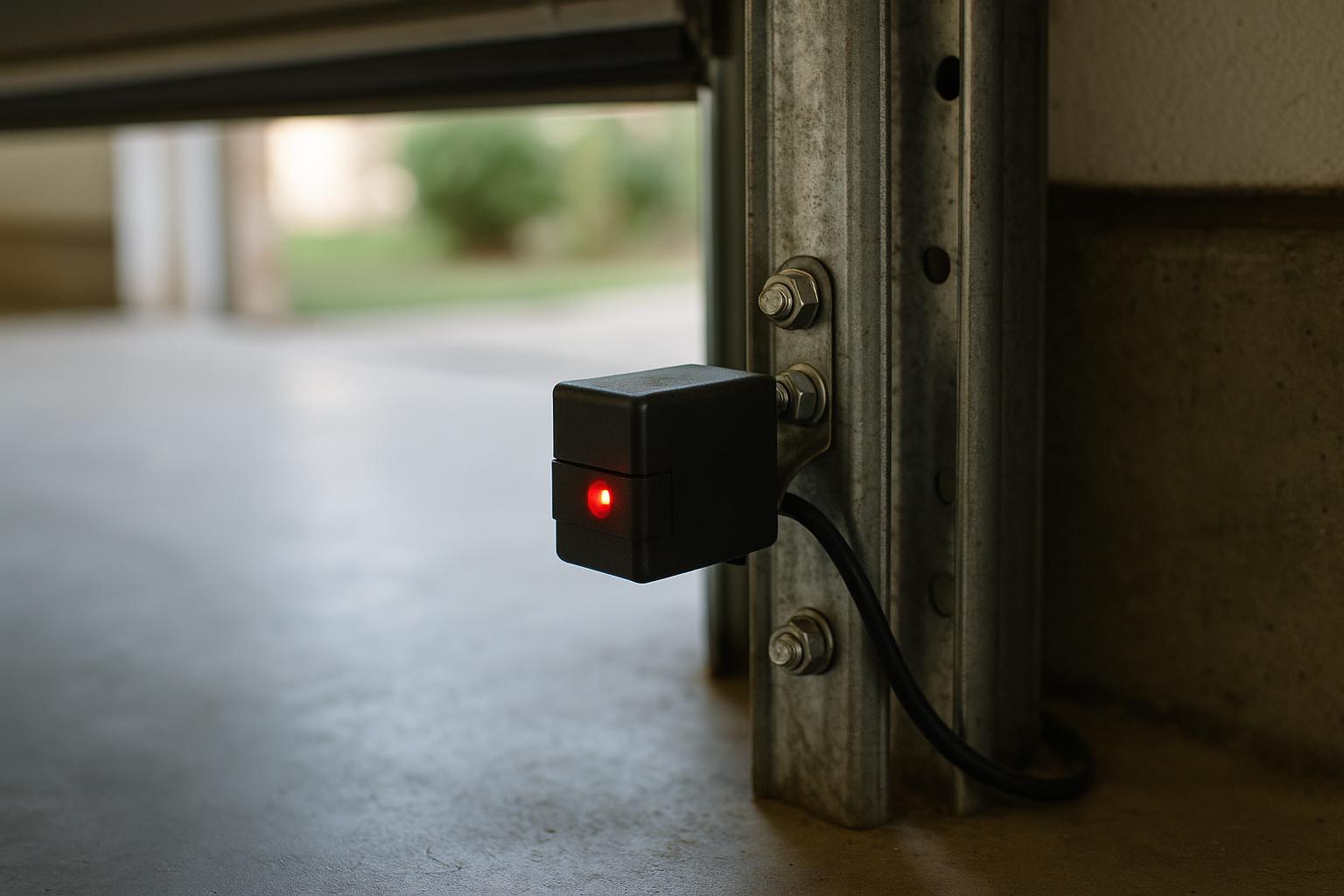
- Photo-eye sensors: These are the small devices mounted near the bottom of your garage door tracks on either side. They project an invisible beam across the opening. If anything breaks that beam while the door is closing, the door reverses.
- Auto-reverse mechanism: If the door encounters physical resistance while closing — like hitting an object or the floor with too much force — it's designed to reverse direction automatically.
Both of these features exist to prevent injuries and property damage. When your door reverses unexpectedly, one of these systems is usually being triggered — sometimes for a legitimate reason and sometimes due to a malfunction.
Misaligned Photo-Eye Sensors
This is the number one cause of garage doors that reverse before reaching the ground. The photo-eye sensors on either side of the door need to be perfectly aligned so the infrared beam connects between them. If one sensor gets bumped, shifted, or knocked out of position — which happens easily, especially in busy garages — the beam is broken and the opener thinks something is in the way.
What You Can Do
Check the small LED lights on each sensor. On most models, both lights should be solid (not blinking). If one is flickering, that sensor likely needs to be repositioned. Gently adjust it until the light becomes steady. Also, wipe the sensor lenses with a clean cloth — dust, cobwebs, and grime can interfere with the beam, especially during the humid summers we get here in the Silver Spring area.
Dirty or Obstructed Sensor Path
Sometimes the sensors are perfectly aligned but something is partially blocking the beam. A leaf, a small toy, a broom handle leaning nearby, or even a spiderweb stretched across the opening can trigger a reversal. We've seen homeowners in Wheaton and Takoma Park spend hours troubleshooting their opener only to discover a garden hose was barely crossing the sensor path.
What You Can Do
Clear the area around both sensors completely. Make sure nothing is within a few inches of the beam path. Get down to floor level and look across the opening to see if anything could be interfering.
Damaged or Frayed Sensor Wiring
The photo-eye sensors connect to your garage door opener with thin wires that run along the tracks and up to the ceiling-mounted unit. Over time, these wires can become frayed, pinched, or chewed through by rodents. When the connection is intermittent, the opener may work sometimes and reverse other times, which makes the problem especially confusing.
What You Can Do
Visually inspect the wires from each sensor up to the opener. Look for obvious damage, loose connections, or spots where the wire is pinched against the track or wall. If you find damaged wiring, this is a repair best handled by a professional to ensure safe and reliable connections.
Incorrect Close-Force Settings
Your garage door opener has adjustable force settings that control how much power it uses to open and close the door. If the close-force setting is too low, the opener may interpret normal resistance from the door's weight or weatherstripping as an obstruction and reverse. This often happens after a new garage door installation or when seasonal temperature changes cause the door's components to expand or contract.
What You Can Do
Most openers have force adjustment screws or dials on the back or side of the unit, typically labeled with arrows for open and close force. You can try increasing the close force slightly — just a quarter turn at a time — and testing the door after each adjustment. Be careful not to set it too high, as that can override the safety reverse feature.
Worn or Broken Garage Door Springs
If your garage door springs are wearing out, the door becomes heavier for the opener to manage. The opener has to work harder to lower the door, and when it senses excessive resistance, it reverses. You might also notice the door moving unevenly, making loud noises, or feeling unusually heavy if you try to lift it manually.
What You Can Do
Spring issues require professional attention. Garage door springs are under extreme tension and can cause serious injury if handled improperly. If you suspect a spring problem, call a qualified garage door technician. Homeowners throughout Silver Spring, Rockville, Bethesda, and Aspen Hill can reach our team for same-day spring inspection and replacement.
Track Problems or Roller Issues
Bent tracks, worn rollers, or debris in the track channels can create enough friction to trigger the auto-reverse mechanism. As the door travels downward and hits a rough spot, the opener senses resistance and reverses to protect the system.
What You Can Do
Inspect the tracks visually for dents, bends, or buildup of dirt and debris. You can clean the tracks with a damp cloth, but avoid using lubricant directly on the tracks — that can actually attract more debris. If you notice bent sections, a professional can realign or replace the affected track segments.
Travel Limit Settings Need Adjustment
Your opener uses travel limit settings to determine where the door should stop when fully open and fully closed. If the close-travel limit is set too short, the opener thinks the door has reached the floor before it actually has and may behave erratically. If it's set too far, the door hits the floor and the extra force triggers a reversal.
What You Can Do
Refer to your opener's manual for instructions on adjusting the down-travel limit. Like force settings, make small adjustments and test after each one. If you no longer have the manual, most manufacturers offer downloadable versions on their websites.
When to Call a Professional
Many of these issues — sensor alignment, cleaning, and minor adjustments — are things handy homeowners can tackle on their own. But if you've worked through this list and the problem persists, or if you suspect spring damage, track misalignment, or electrical issues, it's time to bring in a professional.
A malfunctioning garage door isn't just inconvenient — it's a security risk for your home and a safety risk for your family. The longer the problem goes unaddressed, the more strain it puts on your opener and other components, potentially turning a simple fix into an expensive repair.
At Silver Spring Garage Door, we diagnose and fix reversal issues every week for homeowners across Silver Spring and the surrounding communities. Whether it's a quick sensor adjustment or a complete spring replacement, we'll get your door closing properly and safely. Give us a call and we'll take care of it.